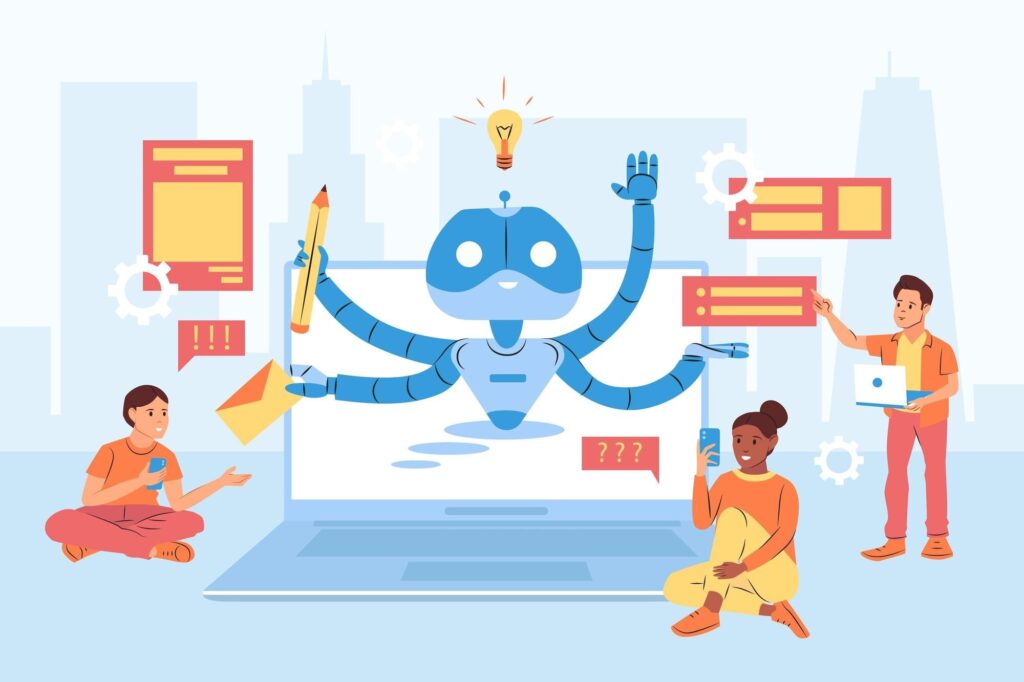
AI in Education: How We Should Prepare for The Future?
Education has always evolved alongside society, yet the pace of change today feels unprecedented. It’s because of the introduction of AI in education. Classrooms once shaped by chalkboards and textbooks are now influenced by algorithms, data, and intelligent systems.
Many students feel uncertain about future skills, while educators worry about relevance, equity, and effectiveness. Parents question whether traditional methods still prepare learners for real-world demands.
Artificial intelligence is no longer a distant concept reserved for laboratories. It is actively reshaping how knowledge is delivered, assessed, and personalised. Therefore, understanding these changes matters because education defines career readiness, adaptability, and lifelong learning.
This blog by Dupli Scanner explores how AI is transforming traditional education and how learners, educators, and institutions can prepare confidently for the future.
AI’s Role in Modern Education
Artificial intelligence in education refers to systems that analyse data, learn patterns, and make informed decisions to improve learning outcomes. Unlike conventional digital tools, AI adapts continuously based on user behaviour and performance. This adaptability allows learning environments to respond to individual needs rather than follow fixed teaching paths.
Traditional education often follows a standardised structure that assumes similar learning speeds and styles. AI challenges this assumption by introducing flexibility, personalisation, and real-time feedback.
Recognisingthe future of education with AI and its role helps stakeholders move beyond fear and see it as an enabler rather than a replacement for human educators.
How Traditional Teaching Models Are Being Redefined?
Traditional classrooms rely heavily on lectures, fixed syllabi, and periodic assessments. While this model has worked for decades, it struggles to address diverse learning styles and evolving skill requirements.
AI introduces dynamic learning models that adjust content difficulty, pacing, and delivery methods. This shift does not eliminate traditional teaching but enhances it with intelligent support systems.
Teachers gain access to insights that were previously unavailable, enabling more informed instructional decisions. The classroom becomes less about information delivery and more about guided exploration and critical thinking.
Personalised Learning Experiences through AI
Personalisation is one of the most significant contributions AI brings to education. Every learner absorbs information differently, yet traditional systems often treat classrooms uniformly.
AI-driven platforms analyse performance data to tailor content, ensuring learners receive appropriate challenges and support.
Adaptive Learning Pathways
Adaptive systems modify lessons based on student progress and comprehension. When learners struggle, content adjusts to reinforce foundational concepts.
So, when learners excel, advanced material is introduced to maintain engagement. This approach reduces frustration and boredom, two major barriers to effective learning.
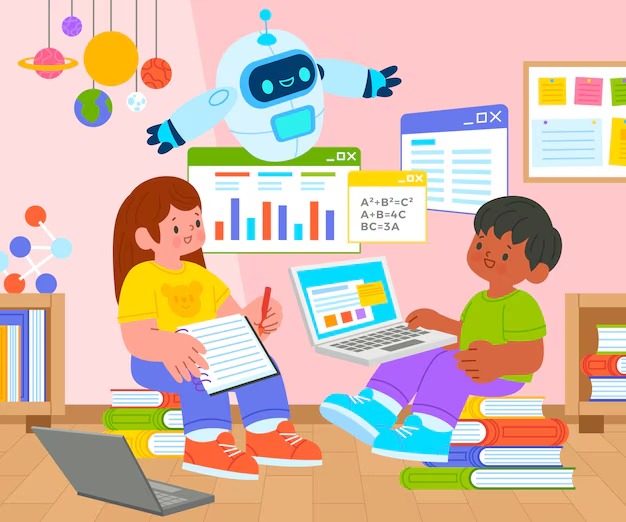
Real-Time Feedback & Progress Tracking
AI in education provides instant feedback on assignments, quizzes, and practice exercises. Immediate insights help learners correct mistakes early and build confidence.
For educators, progress dashboards highlight patterns that inform targeted intervention strategies.
AI-Powered Assessment & Evaluation
Assessment methods are evolving as AI introduces efficiency and depth into evaluation processes. Traditional exams often measure memorisation rather than understanding. AI enables more holistic assessment models.
AI can grade objective assessments quickly while also assisting with subjective evaluation through pattern recognition. This reduces administrative workload for educators and allows more time for mentoring and creative teaching.
Moreover, continuous performance analysis is possible. How?
Instead of relying solely on final exams, AI tracks performance over time. Continuous assessment paints a clearer picture of learner development, encouraging consistent effort rather than short-term exam preparation.
Enhancing Teacher Effectiveness with AI Tools
AI does not replace teachers; it strengthens their impact. Educators remain central to emotional support, ethical guidance, and critical discussion. AI handles repetitive tasks, allowing teachers to focus on higher-value interactions.
- Data-Driven Instructional Insights
AI analyses classroom data to identify learning gaps, engagement levels, and content effectiveness. Teachers can adjust strategies proactively rather than reactively, improving overall outcomes.
- Reduced Administrative Burden
Routine tasks such as attendance tracking, grading, and scheduling consume valuable time. AI automation frees educators to invest more energy in lesson design and student mentorship.
Expanding Access & Inclusion through AI in Education
Education inequality remains a global challenge. Emerging AI in education systems has the potential to bridge gaps by making learning more accessible and inclusive.
Support for Diverse Learning Needs
AI-powered tools assist learners with disabilities through speech recognition, text-to-speech, and personalised interfaces. Hence, these tools create inclusive environments where every learner can participate meaningfully.
Remote & Flexible Learning Opportunities
AI enables scalable online education models that reach learners beyond geographical boundaries. This flexibility supports working professionals, rural students, and lifelong learners seeking continuous skill development.
Skills The Future Education System Must Prioritise
As AI automates routine tasks, the value of uniquely human skills increases. Education systems must adapt curricula to reflect this shift.
Ø Critical thinking and problem-solving skills
Ø Creativity and innovative thinking
Ø Emotional intelligence and collaboration
Ø Digital literacy and ethical awareness
Focusing on these competencies prepares learners to work alongside AI rather than compete with it.
Ethical Considerations Along with Responsible AI Use
AI integration raises ethical questions that education systems must address proactively. Data privacy, bias, and transparency are critical concerns.
Protecting Student Data
Educational institutions must implement robust data protection measures. Clear policies ensure student information remains secure and is used responsibly.
Addressing Algorithmic Bias
AI in education systems reflect the data they are trained on. Educators and developers must work together to identify and mitigate bias, ensuring fairness in learning opportunities and assessments.
Preparing Students for An AI-Driven Future
Preparation requires more than technical exposure. Learners need mindset shifts that emphasise adaptability and continuous learning.
Encouraging Lifelong Learning Habits
AI accelerates change, making static skill sets obsolete faster. Education should instil curiosity and self-directed learning habits that evolve with technology.
Integrating AI Literacy Early
Understanding how AI works, its limitations, and ethical implications empowers learners. AI literacy ensures informed participation in future workplaces and society.
How Educators And Institutions Can Adapt Strategically?
Institutional readiness determines the success of AI integration. Change must be thoughtful, inclusive, and aligned with educational goals.
Let’s go deeper.
Ø Investing in Teacher Training
Educators need ongoing professional development to use AI tools effectively. Training builds confidence and ensures technology enhances pedagogy rather than distracts from it.
Ø Aligning Curriculum with Industry Needs
Collaboration with industry helps institutions design relevant programs. AI-informed curricula prepare students for emerging roles and evolving job markets.
Ø Balancing Technology with Human Connection
While AI enhances efficiency, education remains fundamentally human. Relationships, mentorship, and inspiration cannot be automated.
Ø Preserving The Teacher-Student Relationship
The future of education with AI supports personalised learning, but teachers provide empathy, motivation, and ethical guidance. Maintaining this balance ensures education remains meaningful and humane.
Ø Encouraging Collaborative Learning Environments
AI should complement collaborative projects and discussions. Shared problem-solving builds communication skills and deepens understanding beyond individual achievement.
The Long-Term Impact of AI on Education Systems
Artificial Intelligence’s influence will continue to expand as technology matures.
Education systems that adapt early gain resilience and relevance. Those resistant to change risk widening skill gaps and disengagement. Long-term success depends on aligning innovation with purpose, ethics, and inclusivity.
Therefore, by observing the current scenario, AI is not a temporary trend. Rather, it’s a foundational shift shaping how knowledge is created and shared.
End Note
AI is redefining traditional education by introducing personalisation, efficiency, and accessibility. However, technology alone does not guarantee better learning outcomes. Success depends on thoughtful integration, ethical responsibility, and human-centred design.
Hence, preparing for the future means embracing AI while strengthening critical thinking, creativity, and emotional intelligence. Educators, learners, and institutions must collaborate to build adaptable systems that evolve with change. So, when guided by purpose and empathy, AI in education becomes a powerful ally in shaping an education system ready for tomorrow’s challenges.
Explore more AI-related blogs at Dupli Scanner.