A university student once felt proud after submitting a well-researched assignment. The writing was polished, the ideas felt strong, and the structure looked impressive. Weeks later, however, an unexpected notification arrived. The assignment had triggered plagiarism concerns.
The confusion felt overwhelming.
After all, the student had not copied from anyone else. The content came from previously written work. So, what went wrong?
The issue was self-plagiarism.
In today’s digital world, repurposing existing content feels natural. Students revisit old research. Bloggers update articles. Professionals reuse reports and presentations. Yet many unintentionally cross ethical boundaries without realising it.
This is why using a self-plagiarism checker and understanding responsible content reuse matter more than ever. Whether writing academic papers, blogs, business reports, or online content, preventing self-plagiarism protects originality, credibility, and trust.
This blog by Dupli Scanner explores practical ways to avoid self-plagiarism while maintaining your unique voice and ideas.
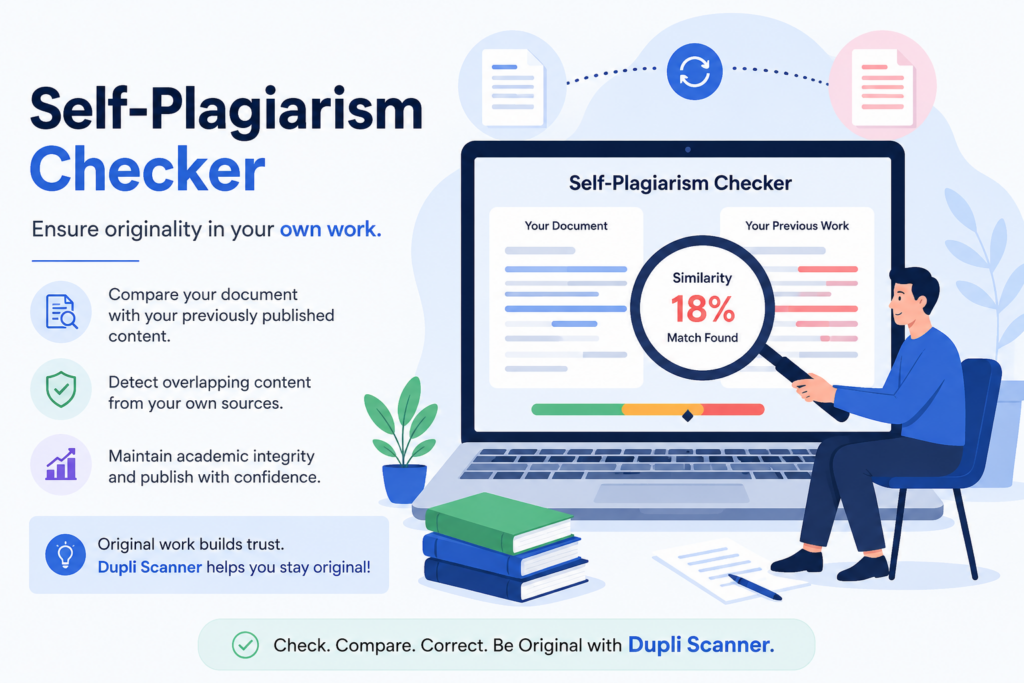
Do You Know What Exactly Is Self-Plagiarism?
Self-plagiarism happens when someone reuses previously published or submitted content without proper disclosure or meaningful modification.
At first glance, this may sound harmless. After all, how can someone plagiarise themselves?
The problem lies in presenting old work as entirely new material. Readers, institutions, and publishers expect originality. Reusing substantial portions of previous content without transparency creates ethical concerns.
For example:
- A student submits part of an old assignment for a new class
- A blogger republishes an article with only minor edits
- A researcher reuses paragraphs from a previously published paper
- A business professional copies past reports into new proposals
The intent may not be dishonest, but the consequences can still be serious.
Why Is Self-Plagiarism Becoming More Common Today?
Modern content creation moves fast.
People constantly create reports, blogs, emails, research papers, social media content, and marketing materials. Tight deadlines often push writers to reuse existing work.
At the same time, content overload creates another challenge. It becomes difficult to remember what has already been published.
Imagine running a blog for years. After publishing hundreds of articles, certain ideas naturally overlap. Without careful review, repeated phrasing and duplicated sections can quietly appear.
The rise of digital publishing has made duplicate content detection increasingly important, especially for creators producing content regularly.
Is Self-Plagiarism Really A Serious Issue?
The answer depends on the situation.
In casual writing, repeating ideas may not cause major problems. However, in professional, academic, or publishing environments, the consequences become significant.
Academic Consequences
Educational institutions often treat self-plagiarism seriously. Reusing old assignments without permission can violate academic integrity policies.
Students may face:
- Grade reductions
- Assignment rejection
- Disciplinary action
- Damaged academic reputation
Professional Risks
For professionals, recycled reports or duplicated proposals may damage trust.
Imagine a client realising a supposedly customised report contains reused content from another project. Confidence can disappear instantly.
SEO & Publishing Issues
Search engines prioritise originality.
Repeated or recycled content can weaken rankings and reduce visibility. Publishers also prefer fresh perspectives over duplicated submissions.
Hence, such a mistake makes duplicate content detection crucial for content creators aiming to maintain credibility and performance.
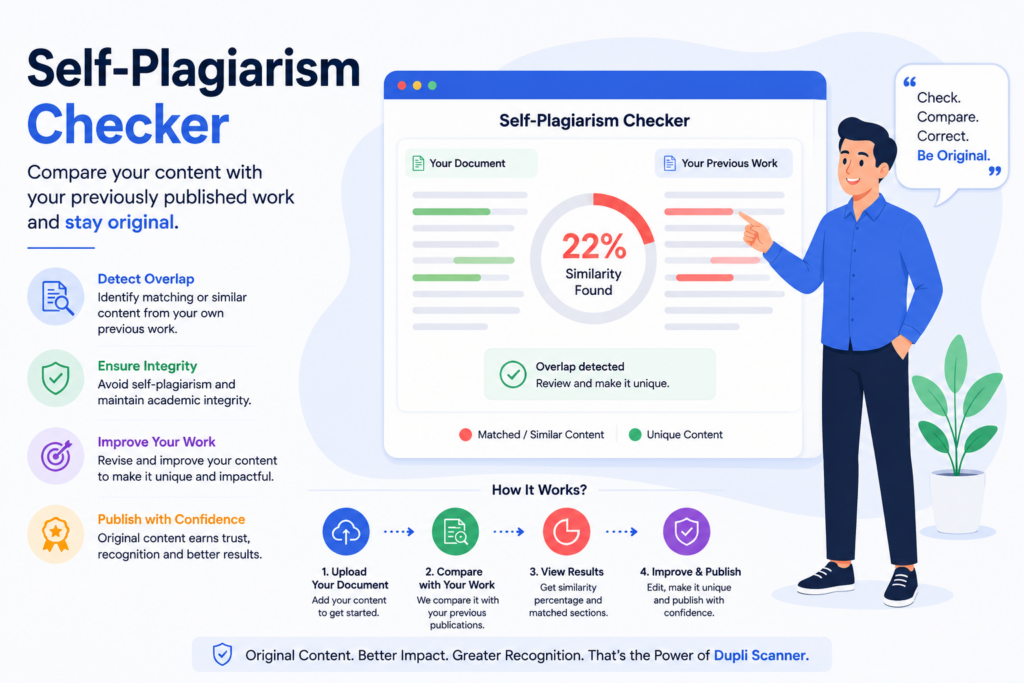
Signs You May Be Accidentally Self-Plagiarising
Many people commit self-plagiarism unintentionally. Here are a few warning signs:
- You Frequently Copy Sections from Older Work
Reusing introductions, conclusions, or explanations may feel efficient. However, repeated copying increases the risk of content overlap.
- Your Writing Sounds Too Familiar
Sometimes writers instinctively repeat their own wording without realising it. This often happens when discussing recurring topics.
- You Publish Similar Topics Often
Writers covering niche subjects naturally revisit related themes. Without careful planning, repetition becomes unavoidable.
- You Skip Content Audits
Failing to review previous work increases accidental duplication. Regular content checks reduce this risk significantly.
How Can You Prevent Self-Plagiarism Effectively?
The good news is that prevention is much easier than correction. Here are practical strategies to stay original without starting from scratch every time.
Start with Fresh Angles
Instead of rewriting the same topic identically, approach it differently.
Ask questions like:
- What has changed since the last version?
- Can a different audience perspective improve the content?
- Is there a stronger storytelling angle?
For example, an article about productivity written for students may require a completely different tone for business leaders.
Fresh perspectives naturally reduce duplication.
Rephrase Ideas, Not Just Sentences
Many writers mistakenly believe that changing a few words solves the problem.
My dear friend, it does not!
True originality comes from restructuring thoughts and adding new insights. Expand ideas, introduce examples, or update outdated information.
Think evolution rather than repetition.
You Should Keep Track of Your Past Work
Maintaining a content archive helps avoid accidental overlap. This becomes especially important for:
- Bloggers publishing frequently
- Researchers writing similar papers
- Marketing professionals managing campaigns
- Freelancers creating repeated client materials
Simple documentation saves considerable effort later.
Use A Self-Plagiarism Checker before Publishing
One of the easiest ways to stay safe involves running content through a self-plagiarism checker. These tools compare text against previous content and highlight repeated sections.
Rather than relying on memory, writers gain a clearer picture of potential overlaps. This step becomes particularly valuable when deadlines are tight.
Why Writers Struggle to Stay Original?
Originality sounds simple in theory, but it becomes difficult in practice. Many writers experience creative fatigue. After discussing similar topics repeatedly, familiar phrases begin appearing automatically. This often happens with professionals writing technical or educational content.
There is also fear.
Sometimes people believe old content performed well, so repeating it feels safer than experimenting. Yet audiences value fresh thinking. Even familiar subjects deserve updated perspectives.
The goal is not abandoning previous ideas. Instead, it means building upon them thoughtfully.
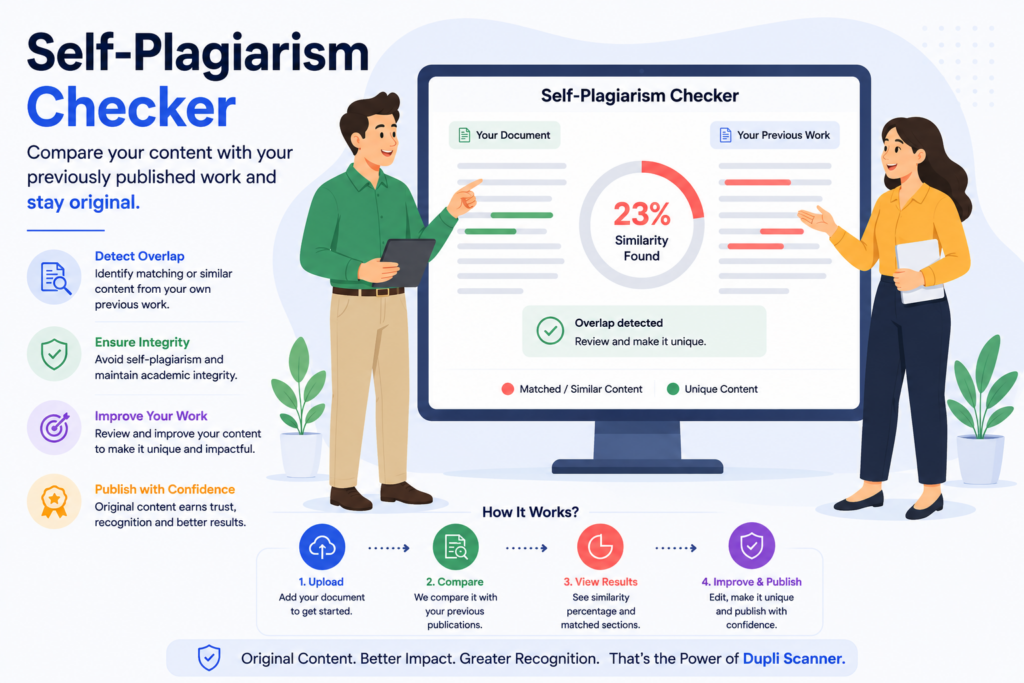
Smart Content Repurposing without Crossing Ethical Lines
Repurposing content is not inherently wrong. In fact, it often makes sense. The key lies in transformation.
Here are ethical ways to reuse existing material:
Turn Old Blogs into New Formats
A long article can become:
- A guide
- A checklist
- A case study
- A video script
Changing format adds originality.
Update Existing Information
Instead of reposting identical content, revise statistics, examples, and recommendations. Fresh context keeps material relevant.
Combine Multiple Older Ideas
Several smaller articles may become one comprehensive resource with added value. This creates something meaningfully different.
Reference Previous Work Transparently
In academic or professional settings, acknowledging earlier material protects credibility. Transparency strengthens trust.
How Technology Helps Prevent Self-Plagiarism?
Technology has changed how writers maintain originality.
Advanced tools now support content review, comparison, and analysis. A strong self-plagiarism checker identifies repeated patterns that may otherwise go unnoticed. This reduces risk while improving confidence before publishing.
Similarly, duplicate content findingtools help website owners maintain search performance by identifying overlapping material. Rather than replacing creativity, these tools support better writing habits.
A Better Mindset toward Originality
Preventing self-plagiarism starts with changing perspective. Originality does not mean reinventing everything. It means contributing something meaningful, updated, or uniquely framed.
Think of writing as a conversation rather than repetition. Every audience, context, and moment creates opportunities for fresh insights. Small improvements often create the biggest differences.
Final Thoughts
Self-plagiarism may seem harmless initially, but it can quietly affect credibility, trust, and content performance. Whether in academics, professional settings, or digital publishing, originality matters more than ever.
The good news is that preventing it does not require starting over each time. Thoughtful rewriting, better organisation, and smart tools make the process easier. By using a reliable self-plagiarism checker, maintaining awareness, and embracing fresh perspectives, writers can confidently create content that feels authentic and valuable.
Follow Dupli Scanner to read more such insightful blogs that will help you to become a good writer.