Imagine asking an AI chatbot a simple question about a historical event. Within seconds, it delivers a confident answer packed with dates, names, and details. It sounds intelligent. It feels convincing. But later, something surprising happens—you discover half the information was entirely incorrect.
Strange? Absolutely.
Unexpected? Not really.
This phenomenon is called AI hallucination, and it is one of the most discussed limitations of modern artificial intelligence systems.
As AI tools become deeply integrated into workplaces, education, content creation, and decision-making, understanding their weaknesses matters just as much as understanding their strengths. Companies like Dupli Scanner, which focus on helping people navigate the growing AI ecosystem, recognise an important truth: technology becomes more useful when users understand where it can go wrong.
This blog explores what hallucination by AI actually means, why it happens, real-world examples, and what users should know before trusting AI-generated information blindly.
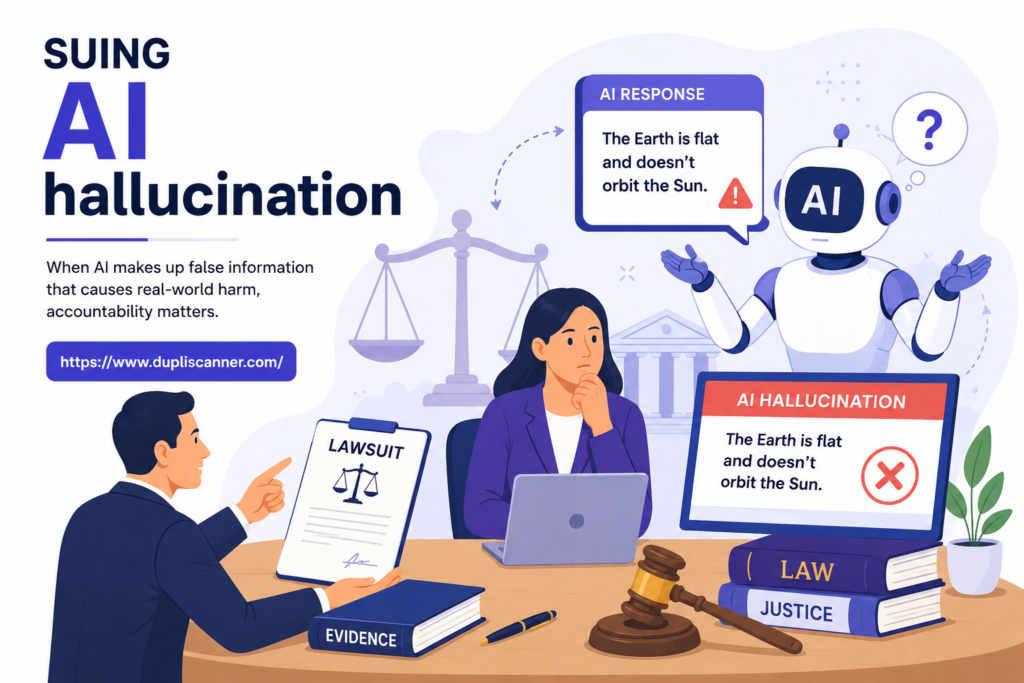
What Is AI Hallucination?
In simple terms, AI hallucination occurs when an AI system generates information that appears believable but is inaccurate, misleading, or entirely fabricated.
Unlike human mistakes, these errors are unusual because AI often presents false information with complete confidence.
For example:
- Inventing facts that never existed
- Creating fake references or citations
- Misrepresenting historical events
- Providing inaccurate technical advice
- Mixing unrelated information
The biggest challenge is that these outputs often sound highly convincing, making them difficult to detect immediately.
Think of it like someone confidently answering a question without actually knowing the answer. Except in this case, the “someone” is a machine trained on enormous amounts of data.
Why Does AI Hallucination Happen?
To understand hallucinations, it helps to understand how AI systems work.
Artificial intelligence models do not think like humans. They do not “know” facts in the traditional sense. Instead, they predict what word or sentence is most likely to come next based on patterns learned during training.
In many ways, AI functions like an extremely advanced prediction engine.
When information is unclear, incomplete, or outside its training scope, the system sometimes fills in gaps with guesses.
This creates an AI hallucination. Several factors contribute to this problem.
1. Missing Context
Sometimes users ask vague or highly complex questions. If AI lacks enough context, it may generate assumptions instead of accurate answers.
For instance, asking about a very niche scientific study without proper details may result in fabricated information.
2. Limited Training Data
AI systems learn from existing datasets. If the model lacks updated or accurate information on a topic, errors become more likely. This challenge highlights one of the major AI limitations affecting modern systems today.
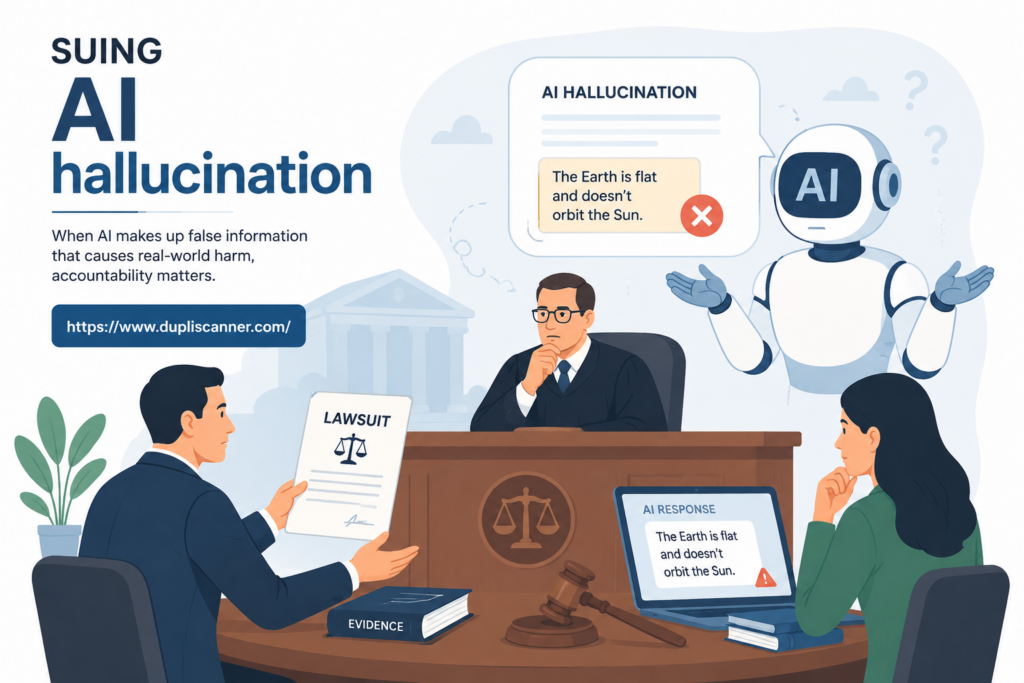
3. Overconfidence in Language Generation
One fascinating issue is that AI prioritises sounding natural. Instead of saying “I don’t know,” some systems generate responses that appear complete, even when confidence should be low.
This makes mistakes harder to identify.
4. Ambiguous Questions
Questions with unclear wording can confuse AI systems.
For example:
“Tell me about Apple’s founder who invented smartphones.”
This mixes different ideas together, increasing the likelihood of misinformation.
A Story That Shows The Real Problem
A marketing professional once used AI to prepare a business presentation. The tool generated industry statistics, competitor insights, and supporting references.
Everything looked polished. Everything sounded authoritative.
The presentation impressed stakeholders until someone checked the citations.
Several reports did not exist. A few statistics had been fabricated. Even some expert quotes were invented. The issue was not carelessness. The professional trusted the system too quickly.
This example highlights why understanding hallucinations by AI matters in real-world situations. AI can accelerate work dramatically. However, unchecked information can create credibility risks.
Can AI Hallucinations Be Dangerous?
The short answer: yes.
Although some hallucinations seem harmless, others can have serious consequences.
Healthcare Risks
Imagine AI suggesting incorrect medical advice or misinterpreting symptoms. Errors in healthcare could potentially influence critical decisions.
Legal Problems
Lawyers have reportedly submitted court documents containing fake case citations generated by AI. This damaged credibility and raised ethical concerns.
Business Decision-Making
Executives increasingly rely on AI-generated reports. False financial projections or inaccurate market insights can lead to costly mistakes.
Academic Integrity Issues
Students using AI without fact-checking may unknowingly submit inaccurate information. This creates problems for both learning and credibility.
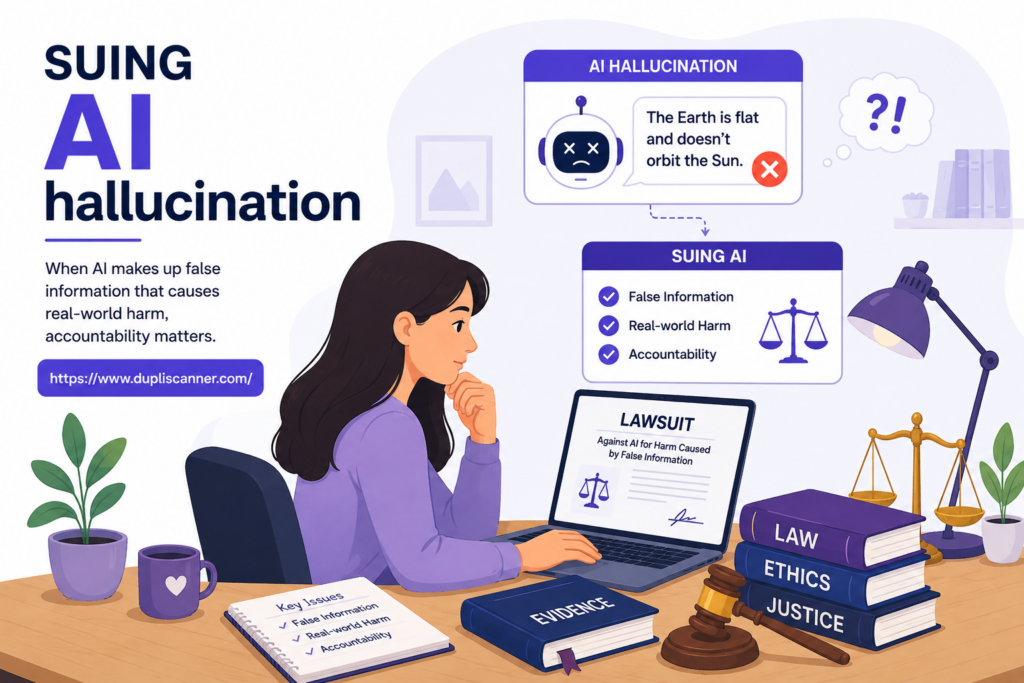
How Can You Identify AI Hallucinations?
Fortunately, spotting hallucinations becomes easier with practice.
Verify Facts Independently
Always cross-check statistics, dates, and claims. Reliable sources remain essential.
Look for Suspicious Confidence
AI often presents misinformation confidently. If something feels overly certain without evidence, verify it.
Check Citations Carefully
Fake references are surprisingly common. Always confirm whether sources actually exist.
Ask Follow-Up Questions
Challenge the response.
Ask:
- “Can you provide a verified source?”
- “How confident are you in this answer?”
- “Is this based on updated information?”
Sometimes additional questioning exposes inconsistencies.
Does This Mean AI Cannot Be Trusted?
Not at all.
AI remains incredibly powerful when used correctly.
The goal is not blind trust or complete scepticism. The goal is smart usage. Think of AI as an intelligent assistant rather than an unquestionable authority.
It helps with:
- Brainstorming ideas
- Summarising complex information
- Drafting content faster
- Improving productivity
- Supporting research
However, human oversight remains essential.
At Dupli Scanner, conversations about responsible AI use continue to grow because informed users make better decisions. The future of AI depends not only on better systems but also on smarter users.
Will AI Hallucinations Ever Disappear?
Probably not entirely. However, researchers are actively working to reduce them. Newer models increasingly combine:
- Better data retrieval systems
- Real-time verification mechanisms
- Improved fact-checking capabilities
- Context-aware responses
Despite progress, artificial intelligence accuracy still depends on careful implementation and human review. In other words, AI may improve significantly, but critical thinking will always matter.
Why Does Understanding AI’s Weaknesses Matter?
Technology often feels magical when it works. But real digital literacy comes from understanding strengths and weaknesses equally. Ignoring hallucinations creates unrealistic expectations. Understanding them builds smarter habits.
The people benefiting most from AI today are not necessarily the ones using it the most. They are the ones using it wisely. Recognising AI limitations helps users avoid mistakes while maximising benefits.
Final Thoughts
Artificial intelligence is reshaping how people learn, work, and create. Yet even the smartest systems have flaws.
Understanding AI hallucination is essential because confidence does not always equal correctness. AI can produce impressive answers, but accuracy still requires human judgment.
As tools continue evolving, informed users will always have an advantage. Platforms like Dupli Scanner help encourage smarter conversations around responsible AI usage, helping users better understand both possibilities and risks.
The future of AI is exciting. However, using it wisely may matter even more than using it often.
Follow us to read more such interesting blogs at Dupli Scanner.