A business owner spends weeks creating a detailed webpage. The content is well-written. The keywords are carefully placed. The page loads quickly. Yet, rankings remain stagnant. Understanding the role of image SEO can help businesses improve rankings, user engagement, accessibility, and even conversion rates.
A competitor with similar content begins attracting more traffic, generating more engagement, and appearing more frequently in search results.
What made the difference?
In many cases, the answer lies in something surprisingly overlooked—images.
For years, website owners viewed images as decorative elements. They added visual appeal, but little more. Today, that mindset has changed dramatically. Search engines have become smarter, user expectations have evolved, and visual content now plays a significant role in how webpages perform.
At Dupli Scanner, discussions about SEO often focus on content quality, technical optimisation, and user experience. However, images remain one of the most underutilised assets in modern search optimisation.
Let’s explore why images have become an essential component of a properly optimised webpage.
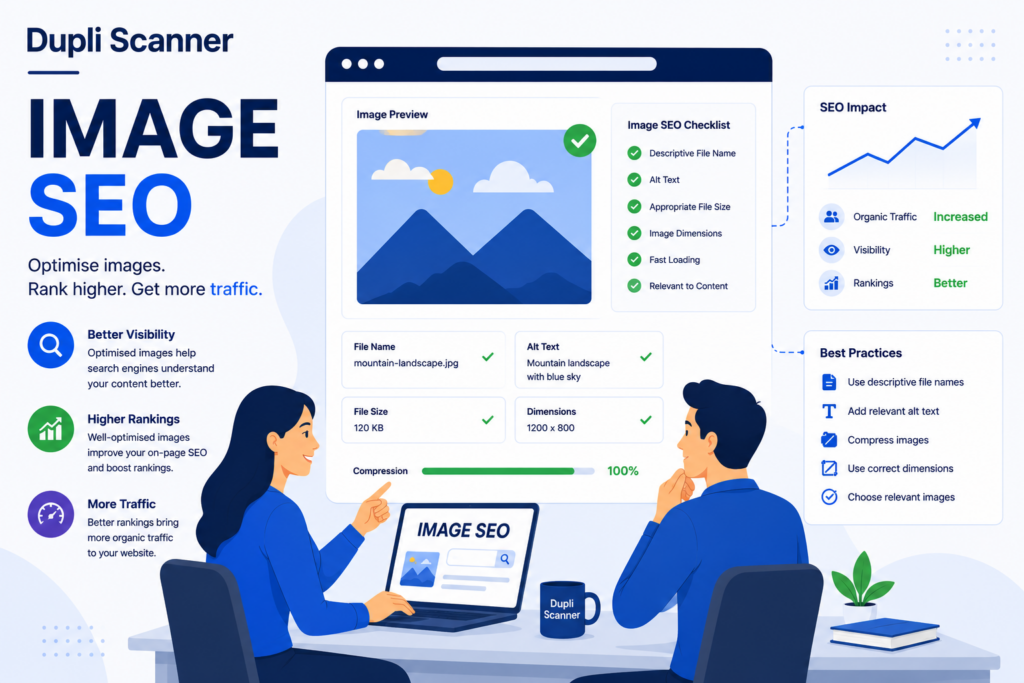
Image SEO: Why Visual Content Is Essential for Modern Search Rankings?
Imagine entering a webpage that contains nothing but endless blocks of text. Even if the information is valuable, most visitors feel overwhelmed within seconds.
Now imagine the same content supported by relevant visuals, illustrations, diagrams, and optimised images.
The experience feels entirely different.
Images help users process information faster. They improve engagement and make content easier to understand.
Search engines recognise these behavioural signals.
As a result, visual content has become an important factor in creating a successful, optimised webpage.
How Search Engines Interpret Images Today?
Many people still assume search engines only understand text. That was largely true years ago. Modern search engines now analyse images using advanced technologies, including machine learning and image recognition.
They evaluate:
- File names
- Alt text
- Image context
- Surrounding content
- Page relevance
- User engagement signals
This means images contribute directly to a page’s overall search visibility. Search engines increasingly aim to understand content the way humans do. Images help provide that additional context.
The User Experience Connection
Search engines prioritise user satisfaction. If visitors quickly leave a webpage, rankings often suffer. Images help prevent this. So, if you have a website and website traffic heavily depends on visual elements, you should consider image SEO.
Breaking Content into Digestible Sections
Large text blocks can appear intimidating. Relevant visuals create natural pauses, making content easier to consume. Readers stay engaged longer because information feels more accessible.
Supporting Information Retention
Research consistently shows people remember visual information more effectively than text alone. A well-placed image reinforces key concepts and improves comprehension.
This enhanced experience benefits both users and search engines.
Encouraging Longer Page Visits
Visitors typically spend more time on visually engaging pages. Longer engagement signals can indicate content quality and relevance. These behavioural improvements indirectly support SEO performance.
Why Images Matter for Google’s Evolving Search Experience?
Search results no longer revolve exclusively around traditional blue links. Today’s search landscape includes:
- Image search results
- Visual search features
- AI-generated search experiences
- Rich snippets
- Product carousels
Optimised images increase visibility across multiple search opportunities. It makes SEO image optimisation increasingly valuable for businesses seeking broader online exposure.
A single image can sometimes attract visitors who would never discover a webpage through traditional keyword searches.
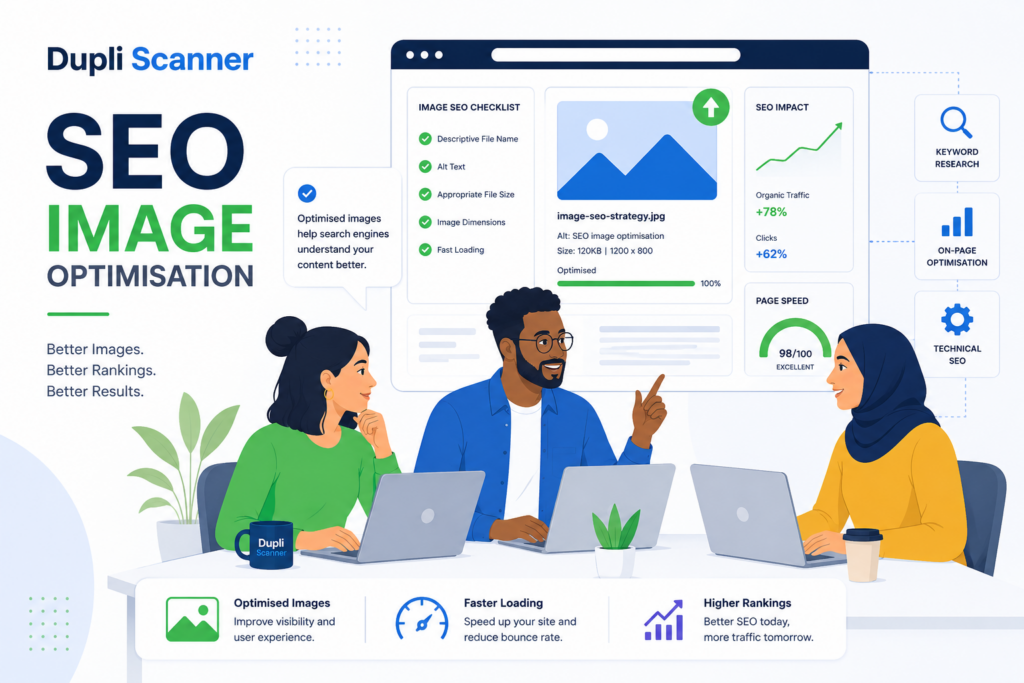
The Hidden SEO Benefits of Properly Optimised Images
Many website owners upload images without any optimisation. This creates missed opportunities.
Improved Keyword Relevance
Images help reinforce topical relevance. So, when filenames, alt text, and surrounding content align naturally, search engines gain a clearer understanding of the page.
This strengthens overall content signals.
Increased Discoverability
Optimised images can appear independently in image search results. These additional entry points drive valuable traffic. Users often discover websites through image searches before visiting the main webpage.
Enhanced Accessibility
Accessibility is becoming increasingly important. Alternative text helps visually impaired users understand image content.
It also provides additional context for search engines. This dual benefit makes image optimisation an essential part of responsible SEO.
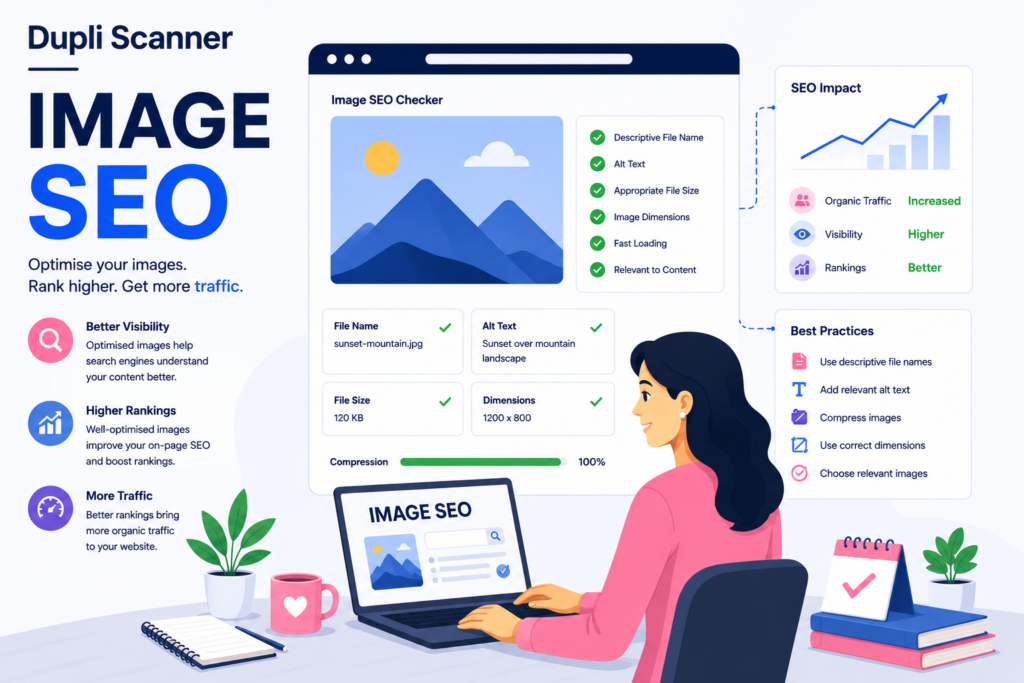
A Common Mistake Most Websites Make
A company invests heavily in professional photography. The images look stunning. However, every image is uploaded with names like:
IMG_001.jpg
PHOTO123.jpg
FINALIMAGE.jpg
Here, search engines gain almost no useful information from these filenames. A more descriptive filename creates immediate context.
For example:
modern-leather-office-chair.jpg
This small adjustment contributes to stronger image relevance. Unfortunately, many businesses overlook these simple opportunities.
How Does Image Size Impact SEO Performance?
Visual quality matters. However, oversized files often create problems. Large image files slow down page loading times. Slow websites frustrate users and negatively affect rankings.
This creates a balancing act.
Businesses need:
- High-quality visuals
- Fast loading speeds
- Responsive design
- Efficient compression
Effective image SEO requires achieving all four goals simultaneously. Modern image formats and compression techniques make this increasingly achievable.
The Growing Influence of Visual Search
Search behaviour is changing. Users increasingly search using images rather than words. Visual search technologies allow people to upload photos and find related products, information, or websites. This shift creates new opportunities.
Businesses that optimise visual assets today position themselves for future search trends. Therefore, ignoring image optimisation may mean missing an important source of traffic tomorrow.
What Makes An SEO-Friendly Image?
Not all images contribute equally to webpage performance. High-performing images typically share several characteristics.
- Relevance
Every image should support the surrounding content. Random visuals rarely provide meaningful value.
- Proper File Naming
Descriptive filenames help search engines understand image content. They also strengthen page relevance.
- Alt Text Optimisation
Alt text should explain the image naturally and accurately. Keyword stuffing should always be avoided.
- Fast Loading Speed
Compressed images improve user experience without sacrificing quality.
- Mobile Compatibility
Most searches now occur on mobile devices. Images should display properly across all screen sizes.
Images And AI-Powered Search Results
Artificial intelligence is transforming search experiences. AI systems increasingly analyse both text and visual content to generate responses. This development makes image optimisation even more important.
An informative image can support content understanding for both users and AI systems.
At Dupli Scanner, conversations around content quality increasingly recognise the growing relationship between AI search and visual relevance. As search engines become more sophisticated, visuals will continue gaining importance.
Creating A Complete SEO Strategy
Some businesses focus entirely on keywords. Others prioritise technical SEO. Many invest heavily in content creation.
The strongest results typically come from combining all elements. Images should not be treated as an afterthought. They should be integrated into a comprehensive strategy that supports:
- User experience
- Accessibility
- Search visibility
- Engagement
- Conversion optimization
This holistic approach creates stronger long-term outcomes.
End Note
Images have evolved far beyond decorative website elements. They now play a meaningful role in user experience, accessibility, engagement, and search performance.
A properly optimised webpage combines compelling content with strategic visual assets. Effective image SEO helps search engines understand content better while improving the overall experience for visitors.
As search continues evolving toward visual and AI-driven experiences, businesses that prioritise SEO image optimisation will gain a competitive advantage.
Dupli Scanner recognises that successful SEO is no longer just about words on a page. It is about creating complete digital experiences where every element—including images—works together to deliver value, visibility, and lasting results.
Follow us for more such insightful blogs around different topics.