A decade ago, the idea of a student receiving personalised lessons from an intelligent digital assistant sounded like science fiction. Today, it is becoming a normal part of education.
Across schools, colleges, universities, and corporate training programs, artificial intelligence is changing how people learn, teach, and access knowledge. Traditional educational models, which often followed a one-size-fits-all approach, are gradually making room for more personalised and data-driven learning experiences.
This transformation is not about replacing teachers. Instead, it is about empowering educators and learners with smarter tools that improve engagement, efficiency, and outcomes.
As technology continues to evolve, AI in education is emerging as one of the most influential forces shaping the future of learning. Understanding this shift is essential for students, educators, institutions, and policymakers alike.
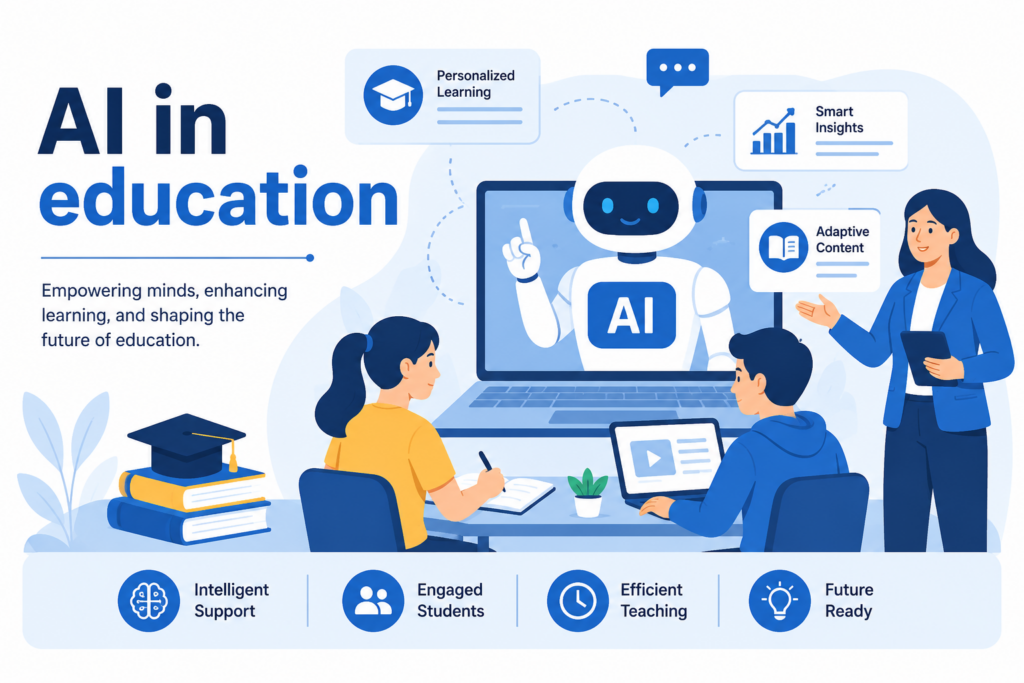
How AI in Education Is Redefining Learning for The Digital Generation?
The education sector has always adapted to technological advancements. From blackboards to smartboards and from libraries to digital databases, innovation has consistently influenced learning.
Artificial intelligence (AI) represents the next major leap.
Unlike previous technologies that primarily improved access to information, AI can analyse, predict, personalise, and interact. This capability is fundamentally changing educational experiences.
Traditional Learning Models Are Facing Challenges: What Are They?
Traditional education systems were designed for large groups of students learning at the same pace. While effective in many ways, this approach creates several challenges:
- Different learning speeds among students
- Limited individual attention
- Administrative workload for educators
- Difficulty tracking learning gaps
- Inconsistent engagement levels
These challenges often affect academic performance and student motivation.
Artificial intelligence helps address many of these limitations by introducing adaptive and personalised learning solutions.
Personalised Learning Is Becoming A Reality
Every student learns differently. Some grasp concepts quickly, while others require additional support and practice. Traditional classrooms often struggle to accommodate these differences effectively. AI-powered systems can analyse learning patterns and customise educational content accordingly.
For example, if a student struggles with mathematics, the system can provide additional exercises and explanations. If another student excels in the same subject, more advanced content can be introduced.
This personalised approach improves understanding while helping students progress at their own pace. As a result, artificial intelligence in education is making learning more inclusive and effective.
Intelligent Tutoring Systems Are Changing Student Support
Imagine having access to a tutor at any time of day. AI-powered tutoring platforms make this possible. These systems provide:
- Instant feedback
- Personalized recommendations
- Practice exercises
- Concept explanations
- Progress tracking
Students no longer need to wait for classroom sessions to clarify doubts. Therefore, such immediate support improves confidence and encourages independent learning. For many learners, intelligent tutoring systems act as valuable supplementary resources alongside traditional teaching methods.
How Does AI Help Teachers Focus on Teaching?
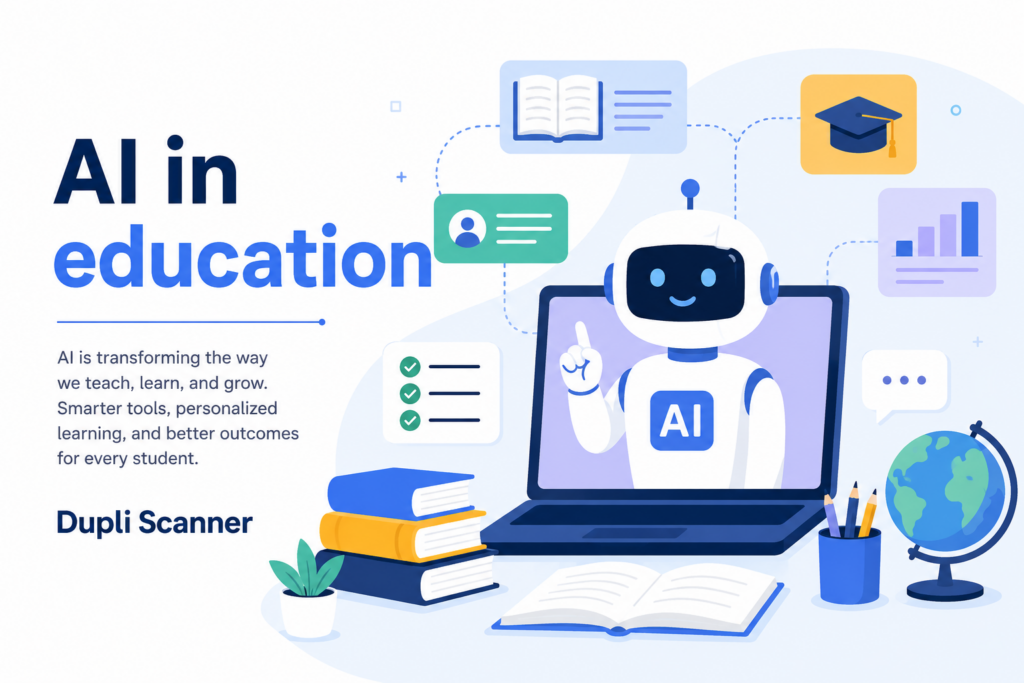
One of the biggest misconceptions about AI is that it aims to replace educators. In reality, AI often reduces administrative burdens, allowing teachers to focus more on instruction and student engagement.
Tasks that consume significant time include:
- Grading assignments
- Tracking attendance
- Managing records
- Preparing assessments
- Monitoring student performance
AI automates many of these processes.
This efficiency gives educators more opportunities to mentor students, develop creative lessons, and address individual learning needs. Teachers remain central to education, while AI serves as a powerful support tool.
Smarter Assessments and Performance Analysis
Assessment plays a critical role in education. However, traditional evaluation methods often provide limited insights into student performance. AI-powered analytics go beyond grades.
These systems can identify:
- Learning patterns
- Knowledge gaps
- Areas requiring improvement
- Student strengths
- Engagement levels
Therefore, by analysing data continuously, educators gain deeper visibility into student progress. It allows for earlier interventions and more effective learning strategies.
The result is a more proactive approach to education.
Breaking Language Barriers in Learning
Language differences have long been a challenge in global education. Artificial intelligence is helping bridge these gaps through:
- Real-time translation
- Speech recognition
- Language learning assistance
- Automated subtitles
Students can access educational content in multiple languages more easily than ever before.
This accessibility expands learning opportunities across diverse communities and geographic regions. It also supports international collaboration and cross-cultural educational experiences.
The Rise of Virtual Learning Assistants
Virtual learning assistants are becoming increasingly common in educational environments. These AI-powered tools answer questions, provide reminders, and guide students through learning materials.
For example, a student preparing for an examination can receive:
- Study recommendations
- Practice quizzes
- Resource suggestions
- Progress updates
These assistants provide continuous support without requiring human intervention for every inquiry. This contributes to a more flexible and responsive learning environment.
AI And Content Creation in Education
Educational content development often requires substantial time and effort. AI is helping educators create:
- Lesson plans
- Quizzes
- Learning materials
- Interactive activities
- Educational summaries
By automating repetitive content creation tasks, teachers can focus on refining educational experiences. Institutions also benefit from improved efficiency and scalability.
This trend demonstrates how AI-powered learning is streamlining educational processes while maintaining quality standards.
Enhancing Accessibility for Students with Special Needs
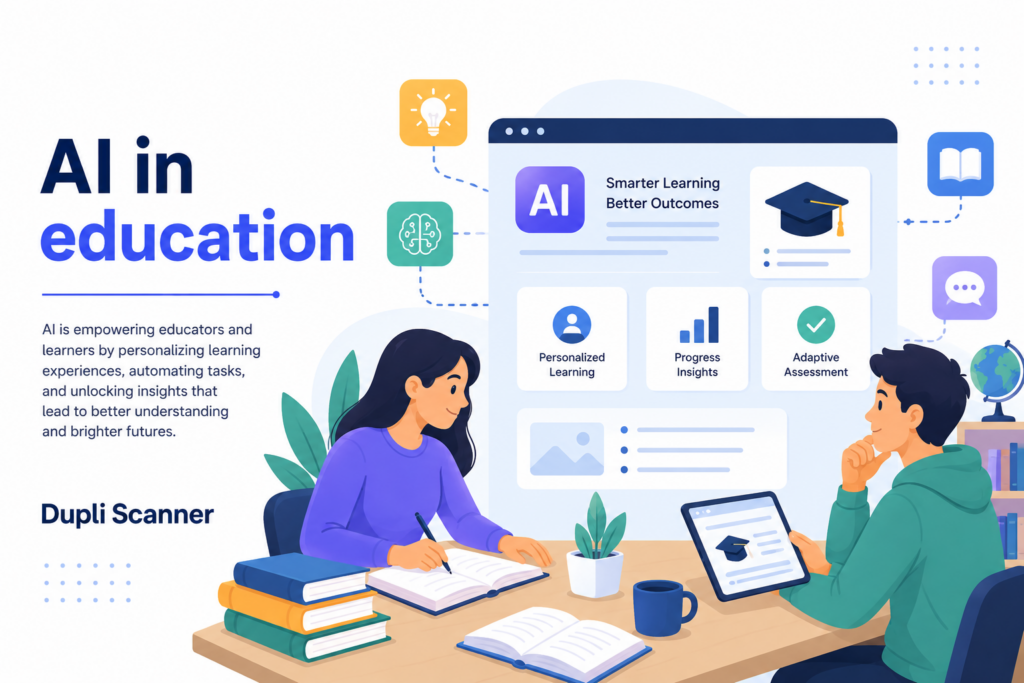
One of the most impactful contributions of AI involves accessibility. Students with disabilities often face barriers that limit learning opportunities. AI technologies help address these challenges through:
- Speech-to-Text Tools
Students with hearing impairments can access spoken content more effectively.
- Text-to-Speech Solutions
Learners with visual impairments can consume educational materials independently.
- Adaptive Interfaces
Customised interfaces accommodate different learning abilities and preferences.
These innovations create more inclusive educational environments where every learner has an opportunity to succeed.
The Role of AI in Higher Education
Universities and colleges are increasingly integrating AI into academic and administrative operations. Applications include:
- Student admissions support
- Academic advising
- Course recommendations
- Research assistance
- Student retention analysis
Higher education institutions use AI to improve both operational efficiency and student success rates. Researchers also benefit from AI tools that analyse large datasets and accelerate discoveries.
Challenges That Come with AI Adoption
Despite its advantages, AI implementation presents several challenges. What are they?
- Data Privacy Concerns
Educational institutions handle sensitive student information. Protecting this data remains a top priority.
- Technology Access Inequality
Not all students have equal access to advanced technologies and internet connectivity.
- Overreliance on Automation
Human judgment remains essential in education. Excessive dependence on automated systems may create limitations.
- Ethical Considerations
Institutions must ensure AI systems operate fairly and avoid bias in decision-making processes.
Addressing these concerns is crucial for responsible adoption.
What The Future of Education May Look Like
The future classroom will likely combine human expertise with artificial intelligence. Teachers will continue providing mentorship, emotional support, and critical thinking guidance.
Meanwhile, AI will handle:
- Personalised learning pathways
- Administrative automation
- Learning analytics
- Adaptive educational content
This partnership has the potential to create more engaging, efficient, and effective educational experiences. Rather than replacing traditional education, AI is helping evolve it.
What do you think?
What Students And Educators Must Adapt?
Technological change is accelerating across every industry. Education cannot remain static while the world evolves.
Students must develop skills that prepare them for AI-driven workplaces. Educators must embrace new tools that enhance teaching effectiveness.
Adaptation does not mean abandoning traditional educational values. It means leveraging innovation to improve learning outcomes and opportunities. Those who understand and embrace these changes will be better positioned for future success.
Final Thoughts
Education has entered a new era where technology plays a larger role than ever before. Artificial intelligence is reshaping how knowledge is delivered, consumed, and evaluated across all levels of learning.
From personalised instruction and intelligent tutoring to accessibility improvements and advanced analytics, AI in education is creating opportunities that were previously unimaginable.
While challenges remain, the potential benefits are too significant to ignore. The future of learning will not be defined solely by technology or human expertise. Instead, it will be shaped by how effectively both work together.
As educational institutions continue embracing innovation, Dupli Scanner recognises the growing importance of understanding these technological shifts. For students, educators, and lifelong learners, the rise of AI in education represents not just a trend, but a transformation that is redefining the future of knowledge itself.