The clock showed 11:48 PM. A blank document stared back from the laptop screen while the deadline moved dangerously closer. The topic seemed clear; ideas floated around in the mind, yet something felt stuck.
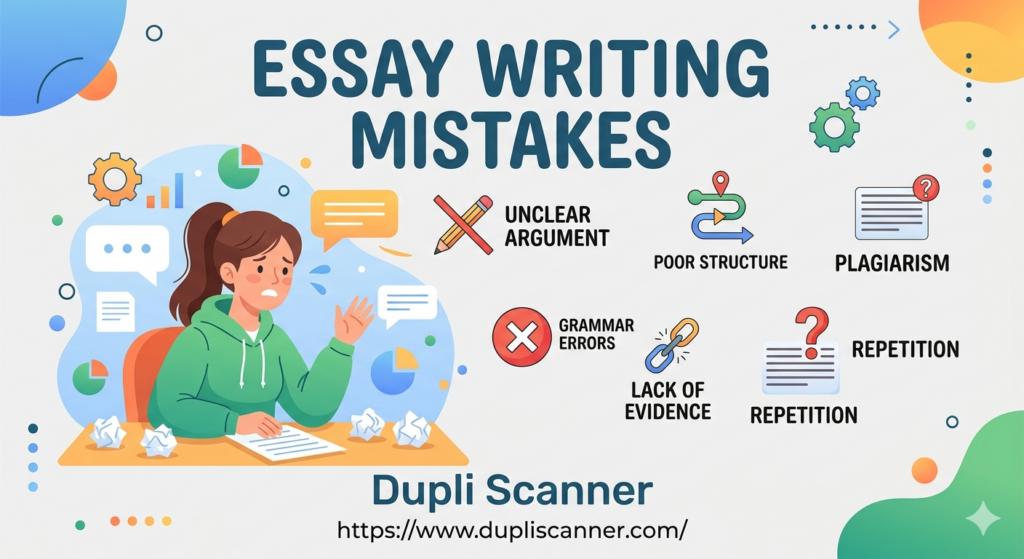
For many students and aspiring writers, this moment feels painfully familiar. Writing an essay often seems straightforward until grades come back lower than expected. Surprisingly, the issue is not always a lack of knowledge. More often, it comes down to avoidable essay writing mistakes that quietly weaken the overall quality of writing.
Whether preparing a university paper, crafting a persuasive argument, or simply trying to express ideas more clearly, avoiding common mistakes can make a significant difference. At Dupli Scanner, content around writing, learning, and communication regularly highlights practical ways to become a more confident writer.
This blog explores the most common essay mistakes and how to avoid them effectively.
Why Do So Many Essays Lose Marks?
Many students believe great writing depends entirely on vocabulary or intelligence. However, strong essay writing often comes down to structure, clarity, and thoughtful communication.
A well-researched essay can still underperform if ideas feel disorganised or arguments remain unclear. Small writing errors tend to create larger problems, especially when they disrupt readability or weaken credibility.
The good news is that most mistakes are completely fixable.
Starting Without A Clear Understanding of The Topic
One of the biggest problems begins before writing even starts.
Students often skim through essay prompts and jump straight into writing. Unfortunately, misunderstanding the assignment question leads to irrelevant arguments and weak structure.
For example, an essay asking to “analyse” should not simply “describe.” Similarly, a “compare” essay requires balanced discussion rather than focusing on one side.
Before writing:
- Read the prompt carefully
- Highlight important instructions
- Identify keywords like analyse, compare, discuss, or evaluate
- Clarify any confusing requirements
Understanding the task always comes before writing the first sentence.
Weak Introductions That Fail to Hook The Reader
Imagine opening a book that immediately feels confusing or boring. Most readers would stop reading quickly.
Essay introductions work similarly.
Many students begin with generic definitions or overly broad statements. This weakens engagement from the start.
A stronger introduction should:
- Introduce the topic clearly
- Offer context naturally
- Present the central argument or thesis
- Create interest without sounding dramatic
Readers should understand where the essay is heading within the first paragraph.
Forgetting The Importance of A Strong Thesis Statement
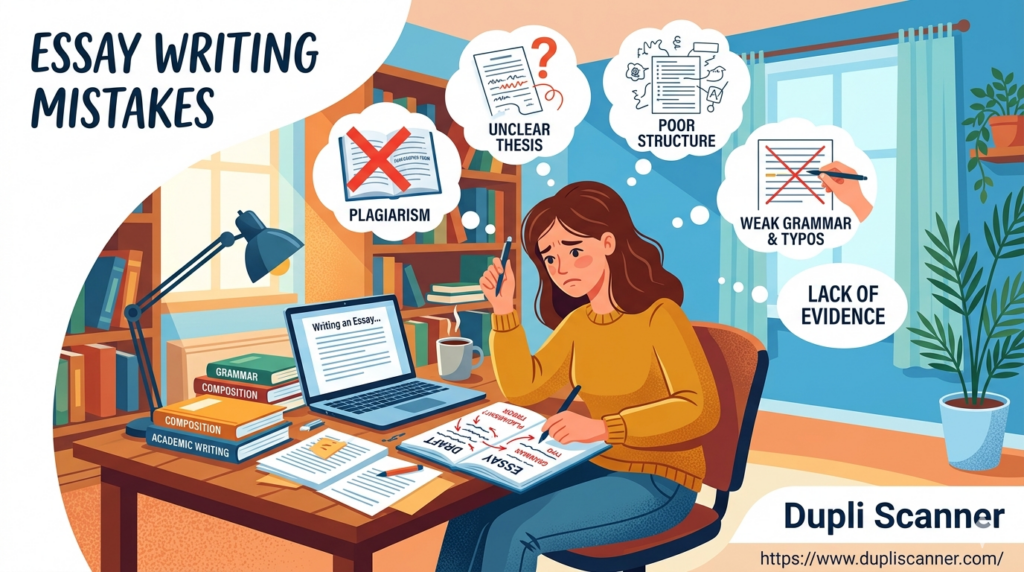
A thesis statement acts like a roadmap. Without it, essays feel scattered and confusing. Unfortunately, vague thesis statements remain one of the most common essay writing mistakes students make.
For example:
Weak thesis:
“Social media affects students.”
Stronger thesis:
“Social media improves communication among students but can negatively impact academic focus when used excessively.”
Specificity strengthens writing immediately. A good thesis creates direction and helps maintain consistency throughout the essay.
Poor Essay Structure That Confuses Readers
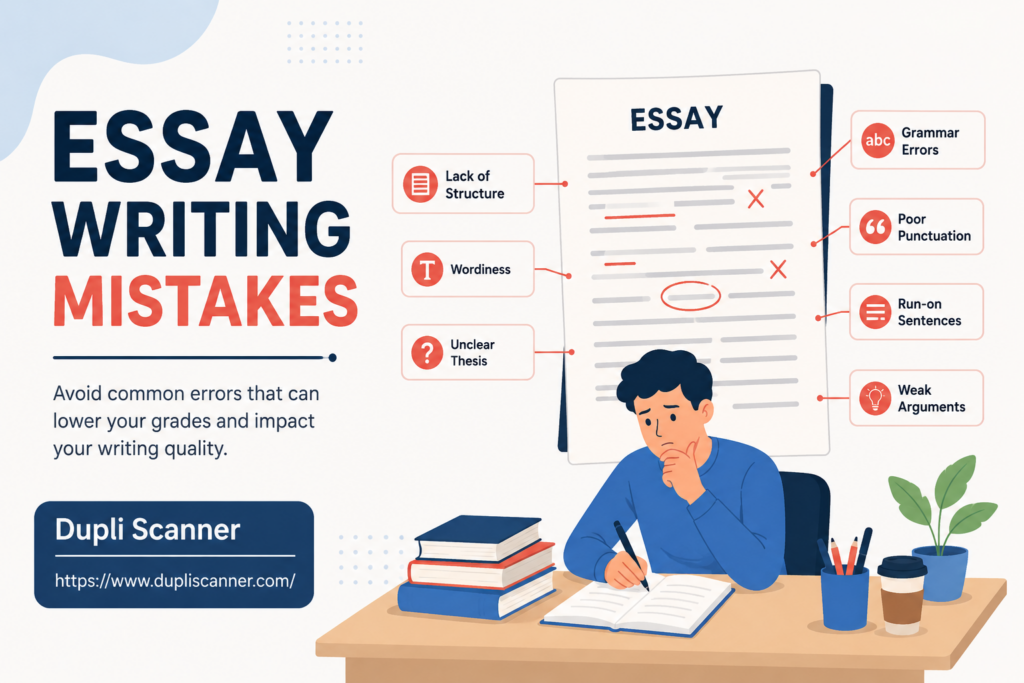
Even great ideas lose impact when presented poorly. Many students place arguments randomly, making essays difficult to follow. Readers should move through content naturally without feeling lost.
A clear structure generally includes:
Introduction
Introduces the argument and thesis.
Body Paragraphs
Each paragraph focuses on one central idea supported by evidence.
Conclusion
Summarises key insights while reinforcing the argument. Transitions also matter. Smooth connections between ideas improve readability and create stronger flow.
Overcomplicating Language
Some writers believe complicated vocabulary automatically sounds smarter. In reality, unclear writing often weakens communication. Readers value clarity more than complexity.
Instead of forcing difficult words into sentences, focus on communicating ideas naturally. Strong writing explains concepts clearly without sounding robotic or unnecessarily academic. Simple and direct communication often creates greater impact.
If the goal is to improve essay writing, clarity should always come first.
Ignoring Grammar And Proofreading
A brilliant essay loses credibility when filled with spelling and grammar errors. Unfortunately, many students finish writing and submit immediately without reviewing it. Even small errors can affect grades because they distract readers from the main argument.
Before submission:
- Read the essay aloud
- Check sentence flow
- Look for spelling errors
- Remove repetitive phrases
- Verify punctuation usage
Proofreading transforms average writing into polished work. This simple step helps eliminate unnecessary essay writing mistakes before submission.
Weak Arguments without Supporting Evidence
Opinions alone rarely strengthen academic writing.
A common issue occurs when students make claims without examples, research, or supporting references.
For example:
Weak argument:
“Online learning is effective.”
Stronger argument:
“Online learning improves accessibility by allowing students to study remotely and manage flexible schedules.”
Evidence builds trust and strengthens credibility. So, whenever possible, support claims with examples, research, or logical reasoning.
Writing Paragraphs That Feel Too Long or Too Short
Paragraph balance matters more than many students realise. Very long paragraphs overwhelm readers. Extremely short ones may feel incomplete.
A strong paragraph should include:
- A topic sentence
- Supporting explanation
- Examples or evidence
- A transition to the next idea
Well-structured paragraphs improve flow and keep readers engaged. Many effective academic writing tips focus on paragraph clarity because readability directly impacts comprehension.
Repetition That Weakens The Essay
Repeating the same point repeatedly does not strengthen an argument. Instead, it makes essays feel repetitive and unfocused. Sometimes students unknowingly restate ideas using different wording without adding value.
During editing, ask:
“Does this sentence introduce something new?”
If not, it may need revision. Strong essays prioritise quality of argument over unnecessary length.
Weak Conclusions That End Abruptly
Many essays begin well but finish poorly.
A rushed conclusion often feels disconnected from the rest of the essay. Simply repeating earlier points does not create impact.
Instead, a conclusion should:
- Reinforce the main argument
- Summarise key ideas briefly
- Leave readers with a meaningful final thought
Strong endings create closure and improve overall quality.
Why Do Small Writing Improvements Matter over Time?
Great writing rarely happens overnight.
Most skilled writers improve gradually by identifying mistakes and refining their habits consistently. A student struggling today may become an excellent writer simply by recognising patterns and making steady improvements.
Reading regularly, practising frequently, and reviewing feedback all contribute to stronger writing skills. Platforms like Dupli Scanner often explore practical writing insights because small adjustments often create noticeable results over time.
The goal is not perfection. It is progress.
Practical Habits to Become A Better Essay Writer
Improvement becomes easier with consistent habits.
Try these strategies:
- Create a rough outline before writing
- Write first drafts without overthinking
- Edit separately after finishing
- Read quality essays regularly
- Ask for feedback from teachers or peers
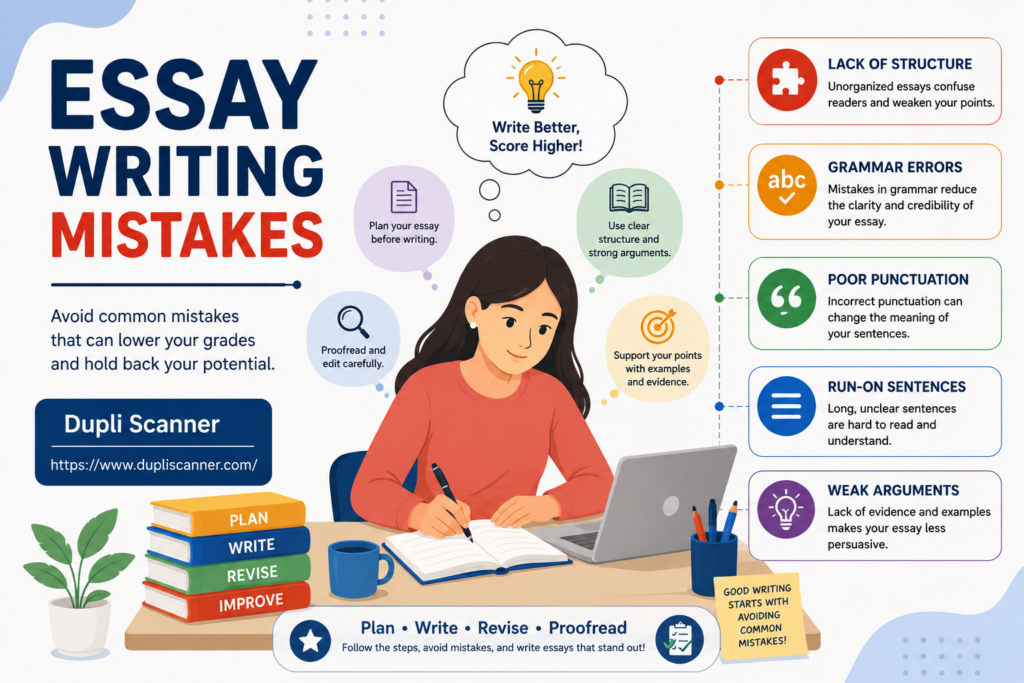
These habits gradually help writers improve essay writing while building confidence. Over time, mistakes become easier to recognise and avoid.
Final Thoughts
Essay writing becomes far less intimidating once common problems are understood. Most students struggle not because they lack ideas, but because avoidable essay writing mistakes quietly reduce the quality of their work.
Clear structure, stronger arguments, careful proofreading, and thoughtful organisation often make the biggest difference. Writing improves when consistency replaces perfectionism.
For students, aspiring writers, and curious learners exploring resources through Dupli Scanner, understanding these common mistakes offers a practical path toward more confident and effective writing. Every stronger essay begins with recognising what to avoid.