Practical Strategies to Stay Productive
The cursor blinked on the screen for nearly twenty minutes. The document had a title, but nothing more. Every few minutes, another distraction appeared. A notification demanded attention, an email seemed urgent, and suddenly, reorganising the desk felt more important than writing the assignment.
This situation is familiar to students, researchers, and academics alike. Procrastination rarely begins with laziness. More often, it stems from feeling overwhelmed, chasing perfection, or simply not knowing where to start.
Developing strong academic writing productivity is not about forcing longer study hours. It is about building smarter habits that reduce mental resistance and make progress feel achievable. At Dupli Scanner, understanding the writing process goes beyond producing words. It also involves helping writers work more efficiently while maintaining originality and quality.
If academic deadlines often feel stressful, these practical strategies can help transform writing from a source of anxiety into a manageable, rewarding process.
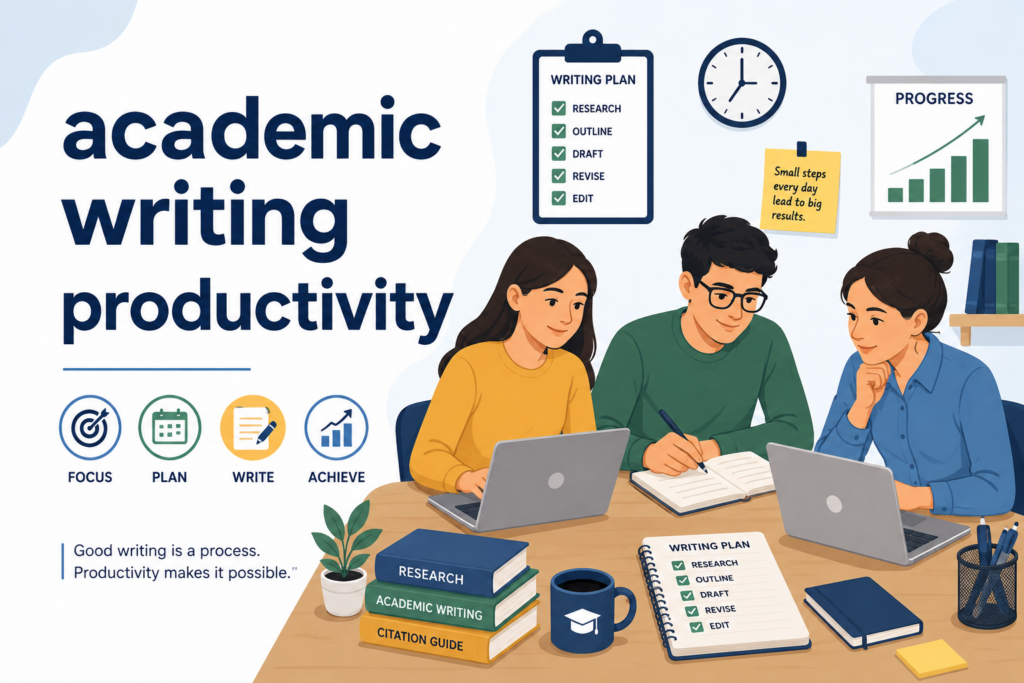
Why Do People Procrastinate When Writing & It Affect Academic Writing Productivity?
Academic writing demands concentration, critical thinking, research, and organisation. Unlike everyday writing, it requires careful planning and precision.
Because of this complexity, many writers delay getting started.
Common reasons include:
- Fear of producing imperfect work
- Difficulty organising ideas
- Feeling overwhelmed by large assignments
- Lack of motivation
- Constant digital distractions
Ironically, avoiding the task usually increases stress. The closer the deadline comes, the harder it becomes to think clearly.
Therefore, understanding the cause of procrastination is the first step toward overcoming it.
Perfection Is often The Biggest Obstacle
Many writers believe every sentence must sound perfect from the beginning. That expectation creates unnecessary pressure. Instead of writing freely, they spend an excessive amount of time repeatedly editing the opening paragraph.
Professional writers rarely work this way.
They understand that first drafts exist to capture ideas, not achieve perfection. Progress always creates better results than perfectionism.
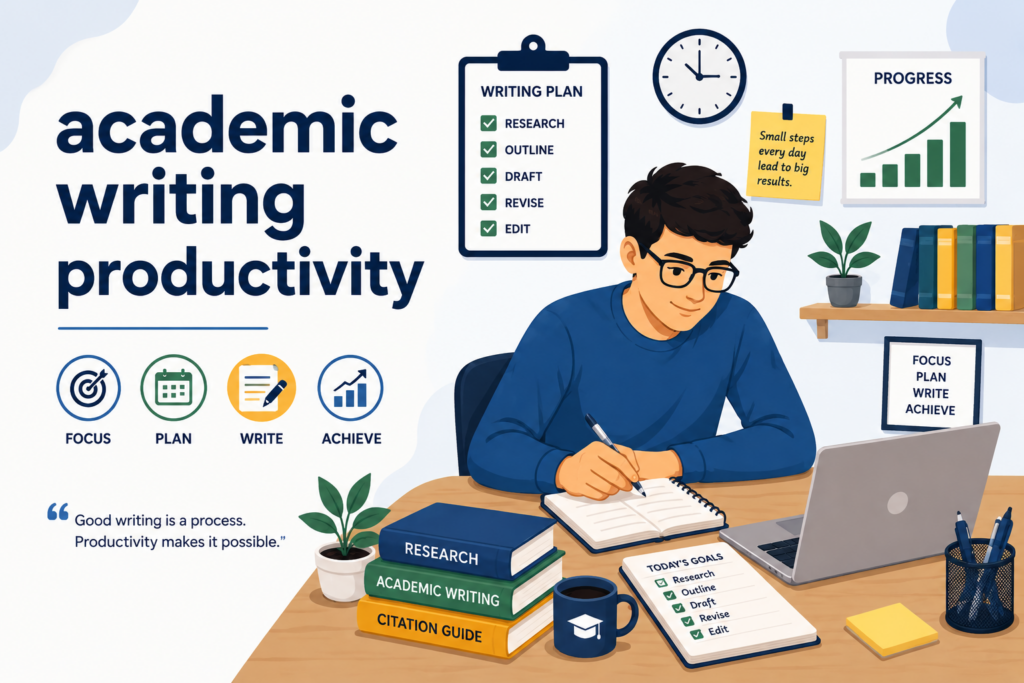
Break Large Projects into Smaller Milestones
One reason academic writing feels intimidating is its size. A 5,000-word research paper sounds overwhelming. Writing 300 words today feels manageable. Rather than focusing on the finished paper, divide the project into smaller tasks.
For example:
- Select the topic
- Gather research materials
- Create an outline
- Write the introduction
- Complete one section at a time
- Edit after finishing the draft
Each completed milestone builds confidence and maintains momentum. This simple approach significantly improves academic writing productivity.
Start before You Feel Ready
Waiting for motivation rarely works. Motivation often follows action rather than creating it. Many experienced academics follow a simple rule, and what’s that?
Write something—even if it feels imperfect. The first few minutes usually feel difficult. After ten or fifteen minutes, concentration begins to improve naturally.
Starting is often the hardest part of the entire process.
Create A Writing Environment That Supports Focus
The surrounding environment influences productivity more than many people realise. A workspace filled with distractions constantly interrupts deep thinking. Simple adjustments make a noticeable difference.
Consider:
- Turning off unnecessary notifications
- Keeping only essential study materials nearby
- Closing unrelated browser tabs
- Using noise-cancelling headphones if needed
- Scheduling dedicated writing sessions
A focused environment reduces the temptation to avoid procrastination while writing by making concentration easier.
Stop Measuring Productivity by Time Alone
Many students proudly say they studied for six hours. But how much meaningful work happened during those six hours?
Real productivity measures completed progress, not time spent sitting at a desk.
Instead of asking:
“How long did I write?”
Ask:
“What did I finish today?”
This simple shift changes the way writing sessions feel.
The Power of Writing without Editing
Editing while drafting interrupts creative thinking.
Writing and editing require different mental processes.
Trying to perform both simultaneously slows progress considerably.
A more effective workflow looks like this:
- First:
Write freely.
- Then:
Revise structure.
- Finally:
Edit grammar, citations, and wording. Separating these stages helps ideas flow naturally.
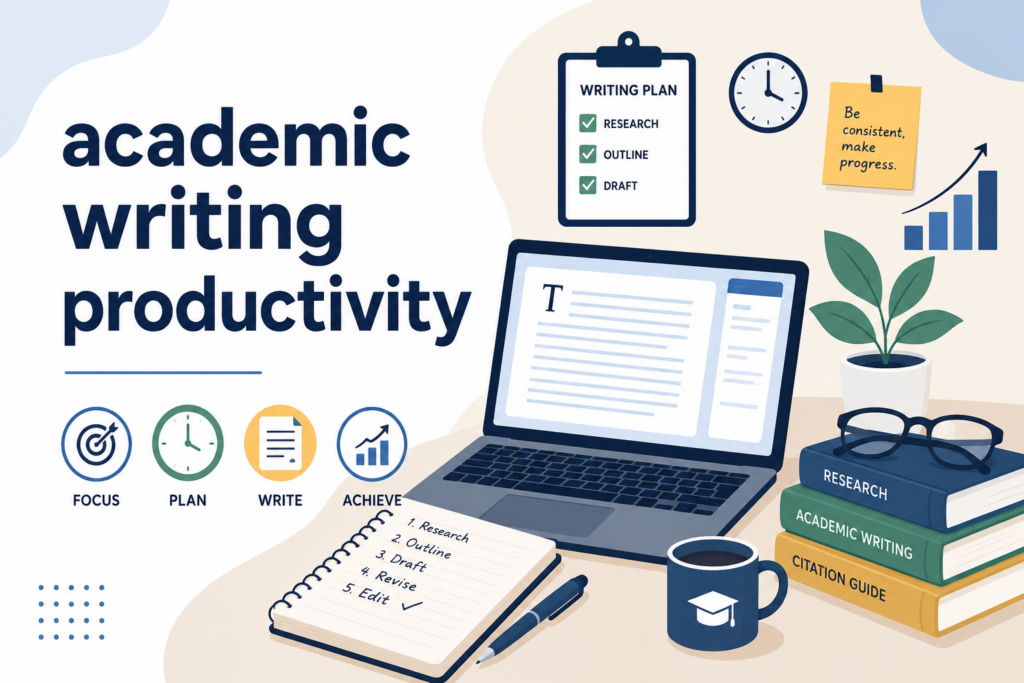
Small Daily Progress Beats Last-Minute Marathon Sessions
Many writers rely on deadline pressure. Although urgency creates temporary motivation, it often reduces writing quality. Instead, consistent daily progress produces stronger results.
Even thirty focused minutes every day gradually become:
- Better research
- Stronger arguments
- More thoughtful analysis
- Less stress before submission
Consistency creates confidence.
Learn to Recognise Productive Procrastination
Not every delay is harmful. Really?
Sometimes organising research, reading sources, or brainstorming ideas contributes meaningfully to the writing process. However, there is an important distinction.
Productive preparation eventually leads to writing, and unproductive procrastination delays writing indefinitely. So, recognising this difference helps maintain momentum.
Use Technology Wisely Instead of Depending on It
Modern writing tools can significantly improve efficiency in academic writing productivity. However, they should support thinking—not replace it. Students increasingly use digital assistants for brainstorming, grammar improvement, and document organisation.
Similarly, originality-checking platforms like Dupli Scanner help writers review their work before submission, giving them greater confidence in the final document. Technology works best when combined with critical thinking and careful revision.
Build A Personal Writing Routine
Successful academic writers rarely rely on inspiration. They rely on routines.
Consider developing habits such as:
- Writing at the same time every day.
- Reviewing yesterday’s work before beginning new sections.
- Ending each session by noting the next task.
- These routines reduce decision fatigue.
Eventually, writing becomes part of the daily rhythm instead of an occasional struggle.
Overcome Writer’s Block by Asking Questions
Sometimes the problem is not motivation. It is uncertainty. Instead of asking:
“How do I write this section?”
Ask smaller questions.
For example:
- What is the main point?
- What evidence supports it?
- Why does this argument matter?
- How does this connect to the previous paragraph?
Questions unlock thinking. Thinking produces writing.
Don’t Compare Your First Draft to Someone Else’s Final Draft
One common source of procrastination comes from unrealistic comparisons. Students often read polished journal articles and assume experienced writers produced them effortlessly.
In reality, those papers went through multiple revisions. Every excellent article once started as an imperfect draft. Accepting this reality reduces unnecessary pressure.
When Deadlines Feel Overwhelming?
Everyone experiences moments when deadlines seem impossible.
During those situations:
- Stop focusing on everything remaining.
- Focus only on the next paragraph.
- Completing one paragraph creates momentum.
- Momentum leads to another paragraph.
Eventually, the impossible task becomes a completed paper. Small victories matter.
Why Productivity Is Really about Building Better Habits?
Many people search for productivity hacks. However, lasting improvement rarely comes from shortcuts. It comes from habits repeated consistently.
These habits include:
- Starting earlier
- Writing regularly
- Accepting imperfect first drafts
- Reviewing progress weekly
- Limiting distractions
Over time, these small behaviours reshape the writing process. Instead of fighting procrastination daily, writers begin working naturally and confidently.
End Note
Procrastination is one of the biggest obstacles to successful academic writing, but it is not impossible to overcome. The goal is not to eliminate every distraction. Instead, it is to build systems that make starting and staying focused much easier.
Improving academic writing productivity begins with small, consistent actions rather than dramatic changes. Breaking projects into manageable tasks, reducing perfectionism, and creating supportive writing habits all contribute to better outcomes over time.
As students and researchers continue balancing increasing workloads, thoughtful use of tools like Dupli Scanner can further streamline the writing process by supporting originality and confidence. Ultimately, productive writing is not about waiting for motivation to appear. It is about creating an environment where progress becomes the natural next step, one paragraph at a time.